Tuesday, December 15, 2009

Sarah Who?

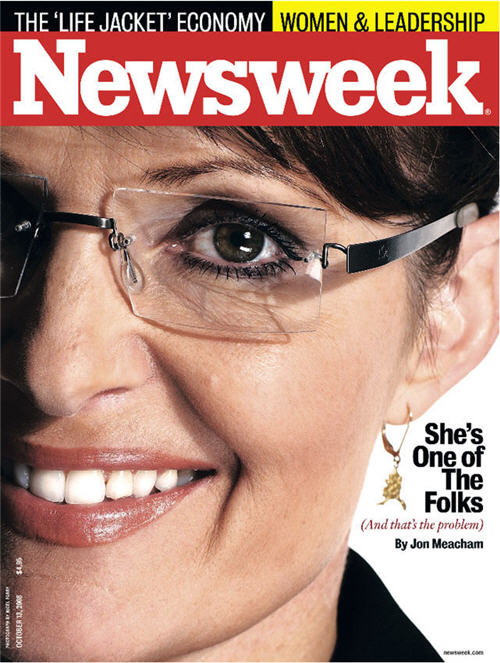
           Ever since John McCain picked her as his running mate last year, Sarah Palin has been in the news. And although it was perfectly reasonable for her to make a scene on Katie Couric during the election, it has gotten old. Frankly, I have no desire to read her new book, where she slams everyone from John McCain to Ronald Reagon to Katie Couric, who she called badgering and biased. Last time I checked, if someone asks you what magazines you read, and your response is "Um, all of them, any of them.", they're not being badgering and biased. You're just embarrassing yourself. Frankly, I don't really care that Meg Whitman, GOP candidate for California Governor, is "California's Sarah Palin". And no, I don't really care that Palin doesn't think Global Warming is a serious issue. She's entitled to her own opinions, but I'd love it if she kept them to herself.
            And apparently, I'm not alone. This week, California Gov. Arnold Schwarzenegger slammed Palin for calling on President Barack Obama to boycott the Copenhagen Conference, saying "You have to ask: what was she trying to accomplish? Is she really interested in this subject or is she interested in her career and in winning the (Republican presidential) nomination?". The fact that a fellow republican, albeit one who has backed strict new emissions controls to combat climate change, would call out Palin for her actions shows just how ludacris her attention grabbing is. And although its clear I've had enough of Palin, I'm interested if you feel the same way, or if you think I'm unfairly picking on Governor Palin.

Sunday, December 6, 2009

H1N1 Scare


          When H1N1 first became an national epidemic last year, there was a lot of attention placed upon the disease, and doing everything we could to prevent it. But now, it isn't uncommon to know someone who had swine flu. And with early detection or a shot, it can be shut down relatively easy, with little chance of harm. However, the times when it isn't detected early shows it is still a deadly disease to be feared. And a recent story in Florida brings up questions about the effectiveness of detecting the deadly disease early.
         When Julie Murphy first saw signs of her daughter Hayli having Swine Flu, she immediately took her to the emergency room at the nearby hospital. However, when she was given a rapid flu test, the test came backnegative, and doctors concluded she had a virus, and sent them home. But the next day, Hayli had a 104 degree fever, and her mother again brought her to the ER, only to be sent home again because of a negative rapid flu test result. The next day, though, Hayli was so weak her mother had to carry her into the ER, and doctors finally started administered H1N1 medications. But the medicine had been given so late, it had little effect, and Hayli spent the next 43 days in intensive care, no one knowing whether she would make it or not. "She was really on the edge of losing her life," said Dr. Roberto Monge, a doctor who treated Hayli. Although Hayli made it out of the ordeal alive and well, the reason for the failed early detection is still a major issue. Dr. Andrew Pavia says studies of rapid flu tests show that a negative result is wrong about half the time. But with more accurate tests costing much more and taking days for results, its hard to decide on an effective course of action. Should we keep the current test, and err on the side of caution if there's any doubt as to the result based on symptoms? Or is there another way we can keep ourselves and others safe from this deadly disease?


Sunday, November 29, 2009

High Profile Break In

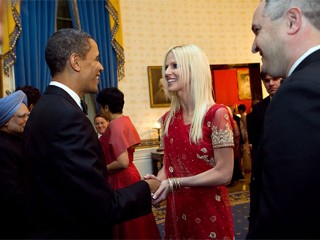
          Last week, quite a controversy was started when Mr. and Mrs. Salahi snuck into President Obama's state dinner celebrating the leader of India. Which begs the question, with secret service at every entrance and exit, making sure that everyone who gets in is supposed to, and anyone who isn't invited stays out, how did the Salahi's get in. And how did they get a picture with the President before anyone noticed they weren't invited

          Even after the event has ended, the Salahi's seem intent on making more of a story, demanding hundreds of thousands of dollars to give their story on the event on national television. And this isn't the first time the Salahi's have in the news for their actions. When Tareq Salahi and his family tried to sell their winery in 2006, he and his parents got into a legal battle over control of the winery, and the company filed for bankruptcy in February.
          Apart from the Salahi's infamous actions, the Secret Service also isn't in an enviable position. Instead of the traditional and thorough check-in process that several invited guests had gone through in previous trips, the guests say that the check-in wasn't thorough or effective. The Secret Service briefly checked their IDs in the dark, they were made to wait outside in the rain before going through a make-shift metal detector, not even putting guests through any type of X-Ray machine. The story as a whole brings up two questions. One, how did two uninvited guests shake hands with the president at his state dinner? And two, whose actions are more embarrasing, the money-grubbing Salahi's, or the irresponsible secret service's?

Sunday, November 22, 2009

More Global Warming Controversy

Recently, hundreds of e-mails were hacked from a server at a British University, leading to quite a stir among global warming skeptics. The e-mails contain discussions of using "tricks" to make temperature warming look more drastic, and derisive comments made about skeptics. Some climate experts, such as Dr. Kevin Trenberth, a climatologist for the National Center for Atmospheric Research, believes that the messages will show the "integrity of scientists". Dr. Michael Mann also responded that “Scientists often use the term ‘trick’ to refer to ‘a good way to deal with a problem,’ rather than something that is ‘secret.”

However, the e-mails also refer to global warming skeptics. A few of the e-mails written about Dr. Patrick Michaels muse about discrediting him by challenging his doctorate at the University of Wisconsin. "This shows these people are willing to bend rules and go after other people's reputations in serious ways," Michaels said. Do statements like Dr. Trenberth's, who said at one point that "The fact is that we can't account for the lack of warming at the moment and it is a travesty that we can't," make you believe that global warming scientists are truly trying to doctor the information they have collected before presenting it, or are the they simply showing "the integrity of scientists," as insisted by Dr. Trenberth?

Sunday, November 15, 2009

Iraq 2.0?

This week, Secretary of State Hillary Clinton said the U.S. mission in Afghanistan was not to rebuild the country, but rather to defeat our enemies, and give the Afghan people the tools to rule themselves. While this may seem like a good goal, and one we should should stick to, it feels to me a little too much like what were doing in Iraq. Our current goal in Iraq is to set up a government for the Iraqi people so that they can rule themselves, without having to rely on foreign aid or a cruel ruler. However, the constant conflict in Iraq between different people in the country has meant that we have been in the country much longer than we should be. It seems that unless the U.S. is very careful, it could end up fighting a long and expensive campaign in Afghanistan, similar to what it did in Iraq.

Clinton did say that "We believe that President [Hamid] Karzai and his government can do better," and that "our primary focus is on the security of the United States of America," but is it realistic to believe that the U.S. will be willing to step out of the country as soon as they take down Al Qaeda? In addition, Clinton was quick to point out things that the Karzai government needed to improve on.  In the end, will Obama and the rest of the government be willing to step out of Afghanistan without rebuilding it in some form, like they did in Iraq?

Thursday, November 12, 2009

Facebook saves the day

         The loss of privacy because of the internet and technology is a hot topic of discussion. Obviously, there are many disadvantages to having less privacy, but there are positives too. In mid-october, a 19-year old Rodney Bradford was sitting at his computer at his father's house in New York. Twelve miles away, an armed robbery took place a minute later. Bradford, who also was under investigation for a previous robbery, found out he was being investigated by the police for the robbery, and turned himself in, confidant he would be found innocent of the crime. However, when he got to the station, a witness picked him out of a line-up, and he was charged with the robbery. A shocked Bradford was transferred to jail, where he spent almost two weeks before his father found him an alibi.
         Bradford's father looked at his son's Facebook account, where he noticed he had updated his status just minutes before he allegedly committed the robbery. After the evidence was looked at, Bradford was found to have a rock-solid alibi, and the charges were dropped. In the big picture, Facebook could become a means of establishing alibis with the likes of phone records and video cameras, helping the judicial system to solve numerous cases. Although there is a definite loss of privacy using sites such as Facebook, there are also positives that are associated with them. What other ways could losing some of your privacy actually be beneficial? And does looking at the positives of sites such as Facebook change or reinforce your opinions on privacy issues presented by the internet and technology?

Tuesday, November 3, 2009

Free Speech?


        On the topic of global warming, almost all scientists agree that there are changes going on in the environment. And many scientists and important political figures, such as Al Gore, believe that these changes are man-made, and require a drastic change in our attitude towards the environment. However, there are important scientists who believe otherwise, such as Dr. Patrick J Michaels, a former professor at UVA and former state climatologist of the state of Virginia, who believes that the climate change is caused less by humans than we thought, and that the changes caused could help the earth ecologically, rather than hurting it. Since he has made his position on global warming clear, Dr. Michaels' reports have been discredited by other scientists, and he has been under enormous pressure to change his views from scientists and politicians. Regardless of whether Dr. Michaels' view on global warming is the popular opinion, he should have free will to express his opinion on the topic, without having to fear repercussions from other scientists and politicians. This privelige is extended only to people who hold the majority view when it comes to global warming, not those who disagree.
         This anecdote relates to a discussion we had in class recently, about whether poeple opposed to gay-marriage should have the right to sign a petition, without fear of their name becoming public knowledge. The fear of these people is that they will be bullied and intimidated because of their views, and they want to be able to express their views without fear of repercussions. However, people who don't support privacy in the matter believe that these people should stand by their opinions, and be willing to undergo bullying in order for their opinion to be heard. In my opinion, however, this view is extremely one sided. Just because people have a different opinion than yours doesn't mean you should be entitled to heckle, insult, and even bully them. If the names were being released just to encourage "civil conversations", I would have no problem with the names being released, and I doubt the petition-signers would either. However, there is evidence of people being harassed because of their opinions, which is unnacceptable and innapropriate. As a result, the names shouldn't be released, so people can express their opinions in safety, which should always be the case.

Sunday, November 1, 2009

Technophobia


         Have you ever met someone who is afraid of driving their car to work everyday? Probably not. But people who are afraid to fly on an airplane? Much more common. Whether its John Madden, Tony Kornheiser, or your 12-year old cousin, chances are you've heard of someone who isn't comfortable getting into an airplane. Which begs the question, why? For every billion passenger kilometers, there are about .05 deaths on air travel. Cars on the other hand, have over three deaths per billion passenger miles. Bicycles? Over 44 deaths per billion passenger miles. And walking? Over 50 deaths. Which, when you boil it down, means that you are 60 times more likely to kick the bucket if you drive to Michigan for a family vacation than if you were to fly.
        So why are people so afraid of a much more advanced, quicker, cheaper, and safer technology? And in general, why are people so hesitant to switch from their old, outdated technology to new, advanced ones? Whether its their not owning their own computer, or not wanting to fly on an airplanes, why are people so afraid of technology?

Wednesday, October 28, 2009

Innocence or Ignorance?


       Recently in class we had a discussion on doublespeak (or disguising a word with a bad connotation under the seal of a word with a better connotation, such as the USA Patriot Act for "Were gonna invade your privacy and listen to all your conversations" Act. As I tried to think of an example I could blog about, I realized that there are tons of examples. For example, instead of flunking a grade, you get held back. Instead of saying someone was killed, you might say they were tragically taken from us.And you might say you got hammered instead of saying you got drunk.
        All of these are examples of sad acts, which can have serious consequences. However, they are disguised under the guise of words which don't carry quite same the connotation of negativity. Which begs the question, why do we use these words? Is it because we are trying to protect ourselves from the truth? Or are we protecting others? Either way, what is the end result of not being straightforward with the truth? Does it make the decieved (whether yourself or the person you are telling) innocent of the truth, helping them to overcome a tough situation. Or does it fall short of sending the intended message, making them ignorant of what really happened. And in the end, is it a good thing to disguise a bad thing under a package of calm and happiness, or does it not get the intended message, and the lesson that could be learned from it, accross?

Thursday, October 22, 2009

Lagniappe/Potpourri

As another year of the student-run comedic play, Lagniappe/Potpourri, comes and goes, the yearly controversy of its appropriateness comes also. A couple years ago, the production was very funny, albiet a bit PG-13 in the process. The students loved the show; the neighborhood families, not so much. There was a public outcry from parents, and in the shows following it has been toned down to be very G, with no sexual innuendos, bad words, or other innapropriate comedic tools. And every year, the student population complains about how the show isn't funny anymore because of the forced changes. Regardless of where you fall in the argument, there is an interesting point to be made: that the student run play was intended for student audiences, not necessarily adults, and definitely not younger children. So, do parents have a right to complain about how the show is innapropriate for their children, when thats not its remotely purpose? I believe that parents have no right to complain: if you don't want your kids in elementary school going, then don't bring them. Anyway, the innapropriate themes in the play are nothing compared to the outside influence your children are getting from the media and TV, so whats the point in fighting Lagniappe, when you could be shutting off your children from something much more dangerous by simply turning off their TV, not letting them listen to music, or choosing their friends for them so that they become perfect little innocent kids?

Wednesday, October 21, 2009

Barbie? Its not as black and white as you think...

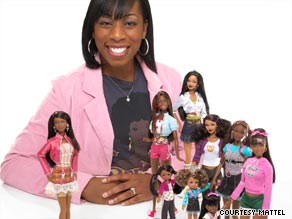
         Recently in class we talked about the issue of race, and its prevalence and effect on the world. You may have heard of the newest barbie released by Mattel: Grace, Tara, and Tichelle, the first african-american barbies. The first thing, however, was criticism of the dolls. Not of the fact that they were african-american, but that they weren't african-american enough. Whether it was that their figures weren't right, or that their hair, which is long, straight, and brown, doesn't represent what type of hair african-american women have. Whether or not you believe that the hair accurately represents the skin color of the doll, which is an extremely one-sided view which generalizes a whole group of people, there is one issue which seems to be forgotten. That is, that the doll was designed completely by an african-american women. I, for one, believe there is no one better to design a representation of an african-american women, then, you guessed it, an african-american woman. However, the question is not about the details of the doll, but the doll itself. Does the making of the doll represent a step forward in the acceptance of african-americans, or is it a forced product to respond to the people who cried foul at the lack of diversity in Barbie?

Sam Bradford

         Recently, the starting quarterback of the Oklahoma Sooners, Sam Bradford, hurt his soldier and is likely out for the rest of the season. The thing is, Bradford isn't just any quarterback for any college football team. The Sooners, who coming into the season were a contender for the national championship, have struggled with Bradford out and are now 3-3 on the season. Bradford, who as a sophomore last season won the Heisman trophy award, chose to come back to Oklahoma for his junior season instead of being a high (possibly the first overall) draft pick and getting paid millions of dollars. The combination of these has put a lot of scrutiny on the right shoulder of a certain Sam Bradford.

         Although some of the national attention has been focused on Oklahoma's title chances going down the drain, most has been focused on the future of the Heisman winner. At the end of last season, there was a lot of debate as to whether Bradford would come back or go to the pros. Obviously there were benefits to each choice, but in the end Bradford chose to come back, hoping to impress the scouts with another big year in college. But now that Bradford is injured, and his season likely over, the debate as to whether he made the right decision coming back has fired up. Whatever position you choose in the argument, the big question is: Why are we arguing about it. The decision was made long ago, and nothing will change that, but more importantly, it wasn't our decision in the first place, and its not our place to second guess it now. And this isn't an isolated incident: whenever a decision is made, there's always someone to second guess it. Why do people have such a fascination with second guessing things? Especially long after the decision has been made?

Tuesday, October 20, 2009

Windows vs. Mac

        When thinking of Mac vs. Windows, you might think of how bad Vista was, how funny those PC Mac commercials are, or how Macs never get viruses. Whatever you might think, its likely about how Mac is better. And when Windows 7 comes out in a few days, is there any way it will be able to recover from the hole it dug itself into with Vista?
       In case you've been in the stone age for the past few years, the last windows operating system, Vista, was met with terrible reviews. While Apple has been steadily improving its computers, Windows has had a bumpy ride. So that begs the question: even if Windows 7 is the best one yet, will it be able to compete with Mac? Or is the public perception of Windows already so low compared to Apple that it would take years to recover? But the fact is, the general opinion surrounding the new Windows release are very optimistic. It has gotten great reviews, although it still seems to be in the shadow of Vista's failure, always being compared to its predecessor. So, even if it is a very good operating system, will Windows 7 be able to compete with the likes of Leopard, the current Mac operating system, or will it forever be doomed to be in Vista's shadow?

Why go vegetarian? More like why not

          Recently in my Biology class, I was working on a project to create a law that would help the U.S. in some way, relating to a topic in biology. I chose to do mine on encouraging people to be a vegetarian. I'd always thought that people mostly became vegetarians to stop the slaughtering of animals. Turns out, there's a few more benefits: not only is it much better for you as a person (the risk of osteoporosis, high cholesterol, and cardiovascular disease is drastically smaller), it is cheaper (you can save as much as $4000 a year), and it is much better for the environment. How much better? Think about this: A single farm in Milford, Utah, which raises pigs, creates more waste than the entire city of Los Angeles. And this is a single farm. Now I'm no environmental freak, but that sounds like a pretty big deal.
          I understand that not everyone will come flocking to the non-meat eating side, but you'd think there would be a lot more. Personally, I know one vegetarian. And while I may not have 5000 friends on facebook, I know a lot of people. So why don't more people become vegetarians? Is is because not eating meat is too drastic of a change? But even then, you can still become a partial-vegetarian, eating no red meat, but still enjoying poultry and sea food, which has many of the same benefits, without all the sacrifice. When the question is no longer Why go veggie? but Why not go veggie?, why are so many people still chomping down on their bacon cheeseburgers?

Sunday, September 6, 2009

An Athlete's Character?

Yesterday night, on the first night of the College Football Season, Boise State defeated Oregon 19 - 8. Unfortunately, that isn't what will be remembered from a game between two programs among the best in the country. After being defeated, Oregon RB LeGarrette Blount suckerpunched Boise State LB Byron Hout, knocking him to the ground, and then confronted a fan as he was being escorted to the locker room.

Blount might not have been a model football player, but he's never shown anything this idsgusting. Coming into this season, Blount was rated as the number two senior running in the country coming, who with a solid season was looking forward to a second or third round selection, and millions of dollars in his future. But after this debacle, the only thing he's looking forward to is a long suspension, and a career washing cars.

But what's truly interesting is his oddly fitting comparison to Eagles QB Michael Vick. Both were very successful football players, who made bad decisions and were punished for it. But even with the number of similarities between them, there's one difference that stands to between them: their future. Vick, who committed a felony and served two years in jail for it, was reinstated, even sought after, by the NFL. But Blount, who undoubtedly made a huge mistake, didn't kill any living things. Didn't make money off his mistake. And wasn't indicted by a U.S. Grand Jury. But he'll likely never get another chance to do what he loves to do.

It's not like Blount wasn't going to be a solid player. He would likely be a back-up RB for a good team, like the Chicago Bears. Yes, the young man made a mistake, one that he will be punished for, but frankly, who doesn't? So it's a tragedy that he won't get a second chance in a league that gives more chances than Pacman has interceptions.

Sunday, August 30, 2009

Soccer

When you think of the most popular sports in the United States, a few come to mind: Football, Baseball, and Basketball. Hockey? Maybe. Soccer? Ehh... not so much. Now you may not concern yourself as to why Soccer isn't as popular as other sports. But even if you did think about it, you couldn't figure it out.

Youth Soccer is played by about 14 million kids in the U.S., while youth football is played by just over a million kids. So why is it that football is so much more popular at the professional level in the United States?

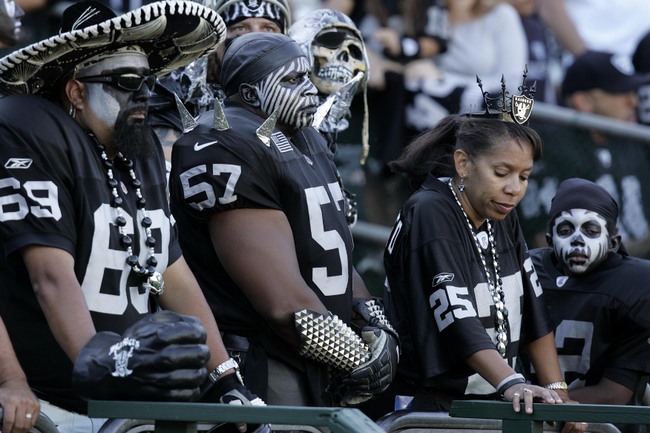
In other countries, especially European countries such as England, Spain, and Italy, soccer is by far the most popular sport. With teams such as Manchester United, Barcelona, and AC Milan, fans support their teams with a blind passion remiscent of a Raiders fan dressed up in full costume. In that respect, the arguement could be made that fans don't get excited for their local team in the U.S. because the teams aren't as good. But even the bad teams in England have their own collection of hooligans to cheer for them, so why wouldn't teams in the U.S.?

Another proposed reason for soccer's level of popularity (or lack thereof) is that we have a culture of playing baseball and basketball in america, just as England has a culture of cricket, soccer, and rugby. Which begs the question: can our culture change? Will we ever become a country where playing soccer is just as much of America as hot dogs and apple pie? Or will we forever look down at it as the sport all the other countries of the world play?