I'm not gonna sugar coat it. It doesn't deserve a mulligan. And it definitely doesn't deserve to be ignored. Unlike most of our politicians out there, I'm not gonna try and spin this in my favor. Not that I could if I tried.
I have been a terrible blogger fourth quarter. Actually, let me rephrase that: I haven't blogged fourth quarter. Period.
It's embarrassing. Frankly, it was hard to force myself to boot up my browser and type that. But in the spirit of an american studies student, its time to be critical of myself. Its not time to piece together 8 blogs to get my total to the required amount. Its not time to make excuses. Its time to look in the mirror and ask the american studies question: WHY?
After thinking about the reasons for my failure, I realized why I have failed in my duty as an american studies student: I lost sight of the importance of the little things like blogging. Even if I have had to dedicate large portions of my time to the ACT, SAT, AP Tests, Track, Junior Theme, and Finals, I still have to find time to fulfill my duty as an american studies student and blog. I have battled the monster that is Junior Year, and though I have survived, I have lost. Even through all the tough accomplishments I have succeeded in, I have lost track of the truly important goal: to develop as a student and citizen of todays world. I forgot that although the big things like AP Tests are important, so are the small things like blogging. How can I expect to succeed next year if I do all the hard things that people lament about, like writing college essays, but then forget to put it in the mail. Seem like a relatively easy and simple thing to do, that you don't need to worry about? Well then, I guess you're not going to college.
And in the end, although I have failed, I have succeeded. Although I don't expect to get a good grade in blogging this quarter, I have learned a much more valuable lesson than any A on my report card could ever teach me: To lose sight of small and seemingly inconsequential things in my time management process is the same as not doing the big things that seem more important. You need the yin with the yang. The peanut butter with the jelly. The good with the bad. You cant choose one and hope for the best. If there was one thing I still remember from second grade, it was Mrs. Morris telling the class that "fifty percent of doing your homework is remembering to bring it to school." This lesson couldn't be truer now. Sure, I turned in a solid Junior Theme. But without the blogging to go with it, I'm losing an essential part of the american studies learning experience.
So fine, Mr. Bolos and Mr. O'Connor, you can give me a bad grade on blogging for fourth quarter (its not as if I expect this one post to change your mind. I fully expect to fail). But it won't matter. Because the lesson I have taken away from looking critically at my own writing overshadows anything I could have learned from blogging,or the benefit of a boost to the GPA. By neglecting my duties as an american studies student, I have succeeded at the same time.
Monday, May 24, 2010

Wednesday, March 24, 2010
Be a follower, Microsoft!
Two days ago, Google ceased censoring its search results in China. Although the possibility of this happening has been around for a while, with China pleading Google to comply with its strict internet policy, it is a monumental event in a country where censorship is a part of daily life. China's strict policy involves censoring search results that aren't favorable to the government. Up till now, no company has disobeyed China's demands, choosing to go along with China even at the loss of human rights.
 In addition, Congress today praised Google's decision in a hearing today, saying the decision to stop censorship "was the right decision". But they didn't stop there. Representative Chris Smith, a republican from New Jersey, said that "They [Microsoft] need to get on the right side of human rights rather than enabling tyranny, which they're doing right now." Is Smith right that Microsoft is "enabling tryanny"? Or are they simply following the status quo is a country where censorship has been the norm for many years? In addition, is it smart for the U.S. government to take such a strong stance on the issue? Regardless of whether its right or wrong, is it worth possibly jeopardizing our foreign relations with the biggest country in the world?
In addition, Congress today praised Google's decision in a hearing today, saying the decision to stop censorship "was the right decision". But they didn't stop there. Representative Chris Smith, a republican from New Jersey, said that "They [Microsoft] need to get on the right side of human rights rather than enabling tyranny, which they're doing right now." Is Smith right that Microsoft is "enabling tryanny"? Or are they simply following the status quo is a country where censorship has been the norm for many years? In addition, is it smart for the U.S. government to take such a strong stance on the issue? Regardless of whether its right or wrong, is it worth possibly jeopardizing our foreign relations with the biggest country in the world?
Thursday, March 11, 2010
Safety v Entertainment

At the recent General Manager meetings in Boca Raton, Florida, all the National Hockey League GMs got together to discuss pressing issues pertaining to the NHL. One of the main topics discussed was that of dangerous hits to the head. One of the main reasons this was such a talked about topic was because of the recent hit on Boston Bruins Center Marc Savard, who has a grade 2 concussion and will likely be out the rest of the season. As fun as watching bone-crushing hits can be, is it worth the potential for injury? And its not like this is just an issue for hockey, either. In baseball, pitchers throw hard baseballs in excess of 90 mph. Although it provides excellent entertainment, watching someone get hit in the face and crumple to the ground is a truly horrifying thing to watch. In nascar, drivers drive at ridiculously high speeds in order to entertain the public. But when does the risk for gut-wrenching crashes outweigh the fun of the race? Although Nascar has recently taken precautions to help prevent crashes, just last week Brad Keselowski was flipped during the race, creating a serious safety hazard for the racers and the fans. Although it is obvious that sports need risk to be entertaining, just when does that risk cross the line? When does it become too dangerous to risk? And are leagues doing enough to prevent serious injury for their athletes and participants. As Sam noted in her blog, Melted Crayons, without danger, sports wouldn't be near as exciting. But at what point does that danger step over the line?
Monday, March 8, 2010
A Dominance of Epic Proportions

Monday, March 1, 2010
A Diverse Curriculum
Today in class, we talked about the value of classes in the arts, such as dance and orchestra, as opposed to the value of technical classes such as math and science. The general consensus was that both groups of classes are very important to the development of students in many different ways. However, our educational system in the united states clearly values the technical classes, where a definite test and grade be given afterwards, and which better prepare you for your future career, supposedly.
 This made me think of the colleges I am looking at, and what type of classes they focus upon. As I blogged about in my earlier blog about diversity in colleges, I have started looking at colleges, and thinking about what trends appeal to me. One of the most important things to me in a college was its value on a liberal arts education. But as I thought about this ideal, I realized that I didn't really have any reasoning to back me up on my preferences. Its not like taking a class in Ancient Roman history would help prepare me for an engineering major. But yet, a liberal arts education still appealed greatly to me. But why?
I believe that the reason I value the well-rounded education a liberal arts college would give me relates a lot to my life goals. As I commented on the An American Studies blog run by Mr. Bolos and Mr. O'Connor, my "green light", or goal, is to be able to escape the North Shore bubble I live in and experience all the diversity and treasures the rest of the world has to offer. By having an education at a Liberal Arts oriented university, I would be able to experience a lot more diversity in my education than focusing on a primarily technical course load. What are some other reasons for valuing a Liberal Arts education, or more specifically, what are some reasons for valuing arts classes such as music?
I believe that the reason I value the well-rounded education a liberal arts college would give me relates a lot to my life goals. As I commented on the An American Studies blog run by Mr. Bolos and Mr. O'Connor, my "green light", or goal, is to be able to escape the North Shore bubble I live in and experience all the diversity and treasures the rest of the world has to offer. By having an education at a Liberal Arts oriented university, I would be able to experience a lot more diversity in my education than focusing on a primarily technical course load. What are some other reasons for valuing a Liberal Arts education, or more specifically, what are some reasons for valuing arts classes such as music?
Sunday, February 21, 2010
Tiger's Apology

Coming into his press conference, I was really rooting for Tiger. I was really hoping that he would make a sincere apology, and that we could put a lot of this behind us. And after watching the speech, I was surprised. Just definitely not in a good way. Not only did he read a completely prepared speech, but he showed no emotion. Well, thats not completely true. When he was bashing the media for attacking his family, he was clearly very angry. So rather than give a sincere apology, he was blaming it all on the media? Seriously? There were plenty of things he could've done to make his apology seem more legit. He could've brought in a speech that wasn't completely prepared. Would it have killed you to bring in a few bullet points Tiger? That way, we could've heard your own personality more, and we wouldn't have to watch you look down at your paper ever two and a half seconds. And it sure wouldn't have hurt if you had let people ask you questions afterward, so that maybe we could've gotten some answers other than just the ones you wanted us to. Overall, Tiger's speech seemed fake and prepared, not the kind of apology that was needed to change the public opinion of you as a cheater. But am I right in bashing Tiger, or was his speech really one of true regret?
Tuesday, February 9, 2010
Well at least my college has Diversity!

When looking at the diversity of a school composed of all upper class white kids, its a wonder why there aren't more people of color at the college. Is it the majorities fault? I find it hard to believe that the people at the school would actively try to keep out minorities, so its fair to say its not their fault their college isn't diverse? What about minorities? If I were them, I would prefer to go to a place where there was a lot of diversity, so I wouldn't be so out of the ordinary, so its clearly not their fault either. Which brings up the possibility that history plays a large role: the college has been homogeneous for so long, it would be really hard to change that because of the stereotypes and judgments that have been associated with it. And we can look at our society as a whole in the same context. Is it fair to say that it's no ones fault that our society isn't equal, because of the long history of inequality that have been present? Or is it someone's fault that our society is the way it is?
Monday, February 1, 2010
Its Everyone's New Trier

I think everyone agrees the renovations will have to happen eventually. The music wing and Gates Gym are old and need to be rebuilt. the cafeteria doesn't fit everyone in the lunch periods. And as someone who runs in the fieldhouse everyday, I can tell you its a piece of junk. So the main argument against the referendum seems to be that this isn't the right time. However, I would argue that now is the perfect time. Not only are construction costs down fifteen to twenty percent compared to previous years, but a bond program that expires at the end of this year allows the school to save 35% on interest. All together, the proposed plan would cost almost $100 dollars more per $10,000 taxed next year than it would this year. In addition to these reasons, there are many other reasons, such as wheelchair accessibility. After talking to a few fellow American Studies students during class today, the main opposition seemed to be that we didn't want to have to be inconvenienced by the construction. And maybe its just me, but that seems pretty selfish. Its gonna have to happen sometime, and were only going to have it for half the time (one year) the sophomores and freshman are going to have it (two years), so its not too big of a deal. After looking at all the facts of the situation, I feel like the referendum should be passed. Do you feel the same way, or am I missing any possible negatives to the plan?
Monday, January 25, 2010
Graphs with Lines
At times during the year in class we have talked about archetypes in literature, looking at archetypal story lines such as the redemptive story arc, and other very simple plots which are represented in many different stories and ways. Today, the topic was revisited, except in the form of the movie Avatar, which consists of typical ideas such as the idea of another planet, humans trying to take over the natives, and then a white guy saving the natives by being the best fighter anyone has ever seen. The fact is, while it may be a great movie, James Cameron (or Jim, if you know him well) wasn't exactly the most creative when it comes to writing and producing his hit movie. Which, if you think about it, isn't exactly a surprise, because known archetypes are what sell. The white dude integrating into a foreign society and saving the world sells. If you don't believe me, the almost two billion dollars its made speaks for itself.
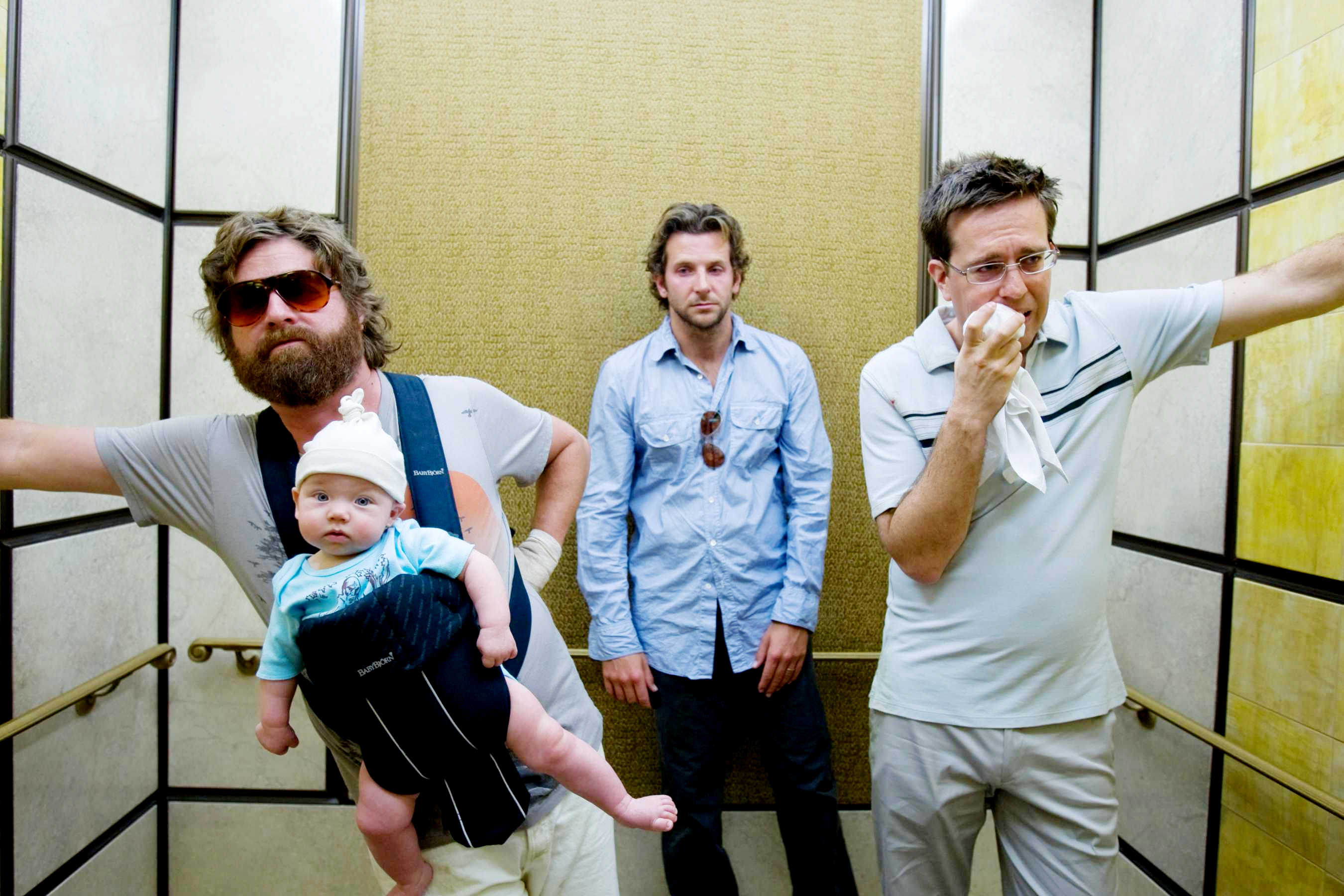 And this got me thinking: What other movies use a tried and true formula to please viewers. And, after thinking about it for a few minutes, I realized that basically every movie does. But the first this that came into my head was my all time favorite movie, the Hangover. Now, if you haven't seen the Hangover yet, you need to put it at the top of your Netflix cue, because it rocks, but I'll summarize it for you anyway. Basically, four friends travel to Vegas for a bachelor party, where they have the time of their lives, only to wake up the next morning to find the groom to be is nowhere to be found. The rest of the movie is spent piecing together clues, bonding, and eventually finding their lost friend. In the end, they make it back to the wedding right before it starts and everyone is happy. The storyline, which is represented by a great start, a sharp decline, and then a gradual rise back to the top, is a clear redemptive story arc. And so even though the plot itself may have been something new, the storyline is nothing new. What are some other movies that follow the same archetype as Avatar or the Hangover? And what are some other story lines that come up over and over again in movies?
And this got me thinking: What other movies use a tried and true formula to please viewers. And, after thinking about it for a few minutes, I realized that basically every movie does. But the first this that came into my head was my all time favorite movie, the Hangover. Now, if you haven't seen the Hangover yet, you need to put it at the top of your Netflix cue, because it rocks, but I'll summarize it for you anyway. Basically, four friends travel to Vegas for a bachelor party, where they have the time of their lives, only to wake up the next morning to find the groom to be is nowhere to be found. The rest of the movie is spent piecing together clues, bonding, and eventually finding their lost friend. In the end, they make it back to the wedding right before it starts and everyone is happy. The storyline, which is represented by a great start, a sharp decline, and then a gradual rise back to the top, is a clear redemptive story arc. And so even though the plot itself may have been something new, the storyline is nothing new. What are some other movies that follow the same archetype as Avatar or the Hangover? And what are some other story lines that come up over and over again in movies?
Tuesday, January 19, 2010
Choices at New Trier

So what is the Brand of New Trier? First, lets look at the definition of what a brand is. According to Merriam Webster, a brand name is "one having a well known ... or marketable name". So what aspects of New Trier does the school market to its students and beyond? One focus, especially now that we are coming up on class selection for next year, is choice. Whether its the sheer number of classes we can take next year, from Yoga and Self Defense to Music Theory to Architectural Models. There are also other ways this message comes through to the students: this year we were given a book detailing the number of clubs available for students to join, from Communist Club to Zombie Survival Club. What are some other ways that New Trier markets itself as a school of choice for its students? And what are some other brands that represent New Trier?
![Reblog this post [with Zemanta]](http://img.zemanta.com/reblog_e.png?x-id=2c5b74cd-6b3c-4843-b454-5f30fa846664)
Thursday, January 7, 2010
From Ashes to Roses
 As I was watching the Rose Bowl on New Years Day, with the Ohio State Buckeyes facing off against the Oregon Ducks, I though about how impressive it was that the Ducks, under first year coach Chip Kelly, were able to save a season which started out on the wrong foot, to say the least. In the aftermath of their 19-8 loss at Boise State, Oregon RB LeGarrette Blount punched a Boise State player and was suspended for the remainder of the season, which I blogged about here. To say that everyone had written off the Ducks would be an understatement. But then, they started winning. After handing USC their worst loss in twelve years, the Ducks became a contender for the Pac-10 champion. And when they only needed to beat their biggest rival, Oregon State, to get to the Rose Bowl and win the Pac-10, thought unthinkable after their horrendous start.
And for their big game, the Ducks reinstated their senior running back Blount. Coach Kelly said there were certain academic and behavioral conditions Blount had to meet before he would get reinstated. And Blount helped the Ducks get to the Rose Bowl, where although they would lose to the Buckeyes, the success of the season was obvious. Earlier, I blogged about how I thought Blount deserved a second chance, a chance he got and took advantage of. After Blount's actions in the beginning game of the season, did Blount deserve a second chance? And how have his actions and subsequent reinstatement affected your opinion of him? Is he still a player with an anger management problem, or is he a guy who made a mistake, but learned from it and has redeemed himself?
Wednesday, January 6, 2010
Cloudy with a Chance of Meatballs
During class, we have been studying the role of children in America. Today, we talked about children's books, and the messages or morals that they contain, beyond just the story itself. One of my favorite books growing up was Cloudy with a Chance of Meatballs, by Judi Barrett. The story is about a town named Chewandswallow, whose only food comes in the form of weather. Whether it rained milk in the morning, or snowed mash potatoes in the evening, there was always something to eat. Although the town was happy for a long time, eventually the portions started getting bigger. Weather such as pancakes the size of buildings and bagels the size of people started to destroy the city of Chewandswallow. Soon, people were unable to live in the town anymore, and they moved to other parts of the world, where although they had to shop for food at grocery stores, they adapted and lived normal lives.
 Although I can't remember exactly what I thought as a kid, I'm pretty sure I liked the book because of the food and the pictures, not for any meanings that I took from it. But even if I wasn't aware of it, the phrase "too much of a good thing" was getting instilled into me from the book, because although pancakes are delicious, having one on top of my house isn't quite as pleasant. Although its an idea I take for granted now, who knows how much I knew about it when I was five? And if I didn't really know much about it, I'm curious as to whether it actually helped me to formulate my set of ideas that I have now. Do hidden messages in children's books help get kids to conform to an idea, or are they more like Baby Einsteins?
Although I can't remember exactly what I thought as a kid, I'm pretty sure I liked the book because of the food and the pictures, not for any meanings that I took from it. But even if I wasn't aware of it, the phrase "too much of a good thing" was getting instilled into me from the book, because although pancakes are delicious, having one on top of my house isn't quite as pleasant. Although its an idea I take for granted now, who knows how much I knew about it when I was five? And if I didn't really know much about it, I'm curious as to whether it actually helped me to formulate my set of ideas that I have now. Do hidden messages in children's books help get kids to conform to an idea, or are they more like Baby Einsteins?
Subscribe to:
Posts (Atom)
